Should Your Stairs and Doors Be Stained or Painted?
Stain shows off the grain and asks more of the preparation, and a clear coat is what makes it last.
October 21, 2026 · 4 min read
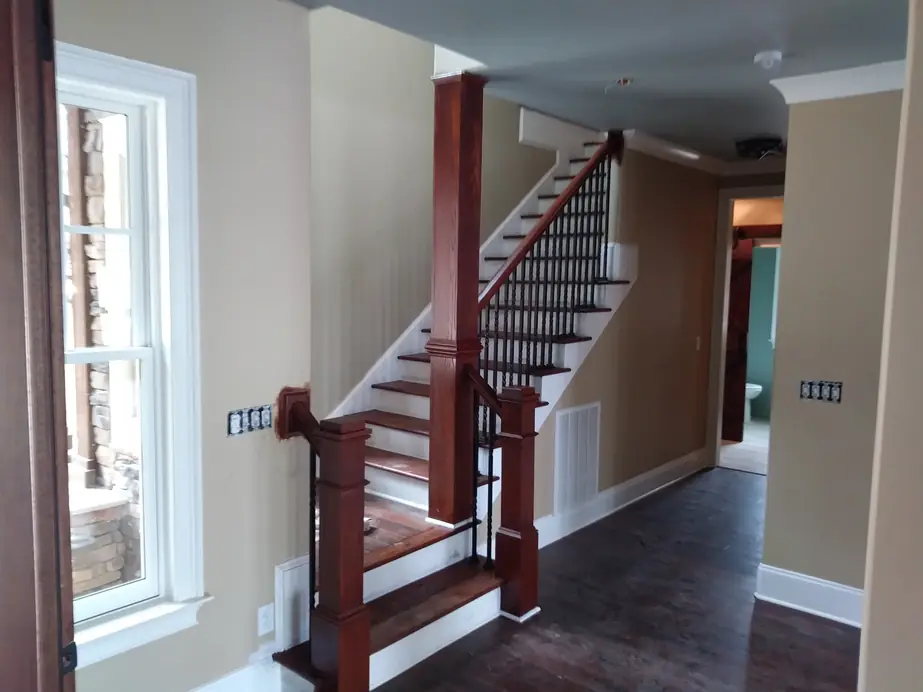
Wood stairs and interior doors give you a choice most other surfaces don't. You can paint them like everything else, or stain them and let the grain show. A stained handrail and newel post set against painted walls and white risers is a classic look for good reason: the wood adds warmth, the paint adds light, and neither fights the other. It is not right for every house, though, and the process is nothing like painting.
When stain makes sense and when paint does
Stain works when the wood is worth looking at: a solid species with an attractive grain in reasonably good condition. Paint works better when the wood is mismatched, patched in several places, or covered in an old finish that will not come off cleanly. Stairs often combine the two, with stained treads, rails and newel posts and painted risers. The painted risers brighten the whole staircase and make the wood tone look richer.
Color pairing matters. Warm, reddish woods sit well beside khaki, greige, sage and other soft neutrals. Against a cool gray wall the same wood can look orange. Hold a sample of the stain on the actual wood, not on a scrap, up against the actual wall before committing.
Why stain asks more of the prep
Paint covers things. Stain soaks in, which means every sanding scratch, glue smear and patch shows up in the color. Sanding for stain stops at a medium-fine grit, because very fine sanding closes the pores and keeps the wood from taking color evenly. Some woods, including pine, maple and cherry, tend to go blotchy, and a pre-stain conditioner applied first evens out how the wood absorbs the color.
Stain is wiped on and then wiped back off in the direction of the grain. What stays in the wood is what gives you the color, and leaving it to sit longer deepens it. That is why a good finisher tests on a hidden spot first and works in small areas at a time, keeping a wet edge so there are no lap marks.
A stained stair assembly is usually done in this order:
- Remove the old finish, or sand to bare wood, so the stain can soak in.
- Fill nail holes with a color-matched filler and test the stain on a hidden spot.
- Apply conditioner on woods that blotch, then stain, wiping the excess off along the grain.
- Let the stain dry fully, as the label directs, before any clear coat.
- Brush on the clear coat in thin layers, sanding lightly between coats.
- Mask the painted risers and the walls so there are no drips or ghost lines.
- Keep foot traffic off the treads until the finish has hardened.
The clear coat does the protecting
Stain is only color. The clear coat is what takes the wear. Treads need more protection than a door because of footsteps, so they typically get extra coats. Handrails are touched all day, so their clear coat has to feel smooth under the hand, which is why they get sanded lightly between coats. Oil-based clear finishes tend to amber and deepen the wood color, while water-based ones stay lighter and clearer. The right pick depends on how your wood looks under each, which is worth testing on the same hidden spot.
Newel posts, balusters and tight corners
Newel posts and balusters have detail where finish pools and runs. A brush works best, with the excess worked out of the corners before it sets. Metal balusters beside stained wood get masked or carefully cut around. The order is tight detail first, then the flat faces, so the brush never passes over an area that has already started to dry.
Doors finish best laid flat
Interior doors come out best when they are taken off their hinges and laid flat on sawhorses, which stops runs and sags. The top and bottom edges get sealed as well, since bare end grain is where moisture gets in. Hardware comes off rather than being taped around. On a paneled door, the panel edges are done first, then the rails and stiles, then the long faces, always along the grain.
Temperature and humidity play a part here too. Stain and clear coats dry slowly in damp air and can cloud or stay tacky, so a cool, dry day with the windows cracked is better than a muggy one. Stairs also need planning, because the treads cannot be walked on while the finish cures, and in a two-story house that means thinking about where everyone will be for a day or two.
For homeowners in Bonaire and Warner Robins weighing stain against paint, Earnest at Unique Painting can look at your staircase or doors and tell you what the wood will take. You can reach him at (478) 420-1979.
Unique Painting LLC, (478) 420-1979
Call (478) 420-1979More articles
Why Kitchen Cabinets Need a Different Paint Than Your Walls
A cabinet door lives a rougher life than any wall, and the paint and the process have to be chosen to match.
What Happens Before the Color Goes on a Lap Board House
A good exterior paint job is decided in the days before the first coat, and those days are mostly scraping, patching and waiting for wood to dry.