Why Kitchen Cabinets Need a Different Paint Than Your Walls
A cabinet door lives a rougher life than any wall, and the paint and the process have to be chosen to match.
October 21, 2026 · 4 min read
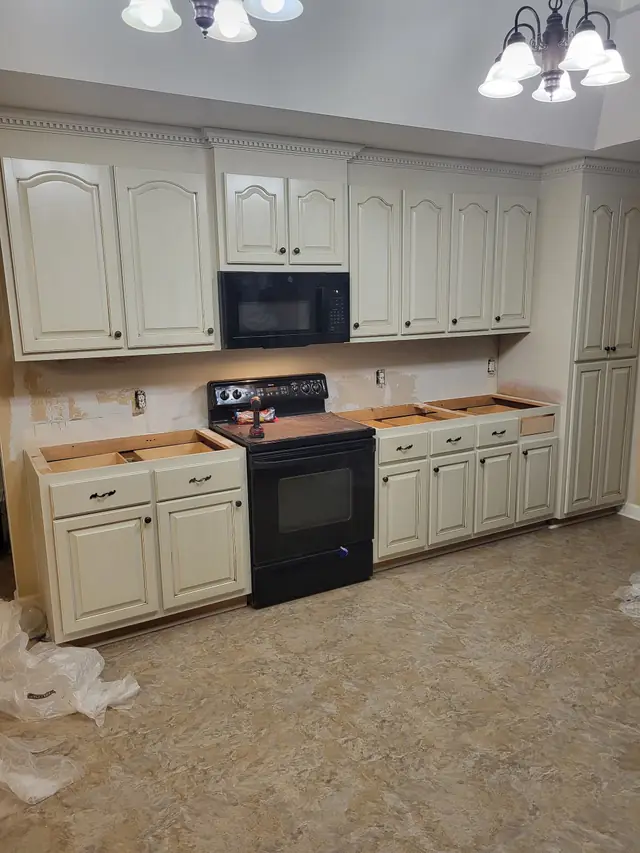
Painting kitchen cabinets is not the same as painting a wall that happens to have hinges. A wall gets looked at and now and then bumped by a vacuum. A cabinet door gets pulled with greasy fingers, wiped with a damp rag, slammed shut a dozen times a day and splashed by whatever is on the stove. The paint and the process both have to be chosen for that kind of life.
One review of Unique Painting says Earnest was "knowledgeable on his explanation on what was the best type of paint to use for the walls and kitchen cabinets." Those are two different answers, and a homeowner deciding between painting the doors and replacing them should know why.
Why wall paint fails on a cabinet door
Interior wall paint is made to stay a little soft, to touch up easily and to look even under a roller. That is exactly what you don't want on a door that closes against a frame. A soft finish can stay slightly tacky for weeks, so the door sticks to the cabinet box and pulls a strip of paint off the next time it opens. Painters call that blocking. It looks like a bad paint job, but the real cause is the wrong coating for the use.
Wall paint also burnishes. Rub a flat or eggshell wall with a wet sponge and a shiny patch appears where you rubbed. Around a cabinet handle, where hands and cleaning cloths work all day, that polishing and wearing-through can show up within a month or two.
What a cabinet enamel does that wall paint doesn't
A cabinet-grade enamel is built to cure hard, to level out so brush and roller marks relax away, and to stand up to moisture and household cleaners. Both oil-based and water-based versions exist, and each has tradeoffs. Oil-based enamel flows out beautifully but smells strongly and can yellow with age, especially on white. Water-based enamel stays clearer and cleans up with water, but it is less forgiving to apply and needs a steady hand. A good painter will tell you which one suits your kitchen and your cabinets, and why.
Sheen matters too. Satin and semi-gloss wipe clean more easily than flat, but a glossier finish also shows every dent, patch and sanding scratch underneath it. On older cabinets with a few dings, satin is usually the kinder choice. On smooth, newer doors, semi-gloss will give you the easiest cleaning.
Prep decides how long the finish lasts
Paint can only hold as well as the surface it is holding on to. Kitchen cabinets collect a film of cooking grease that you can't always see, especially around the handles and above the stove. Paint over that and it lets go in sheets. So the first step is a proper degreasing, then a scuff sanding to give the surface some tooth, then a bonding primer so the enamel has something to grip.
The usual order of a cabinet job looks like this:
- Doors and drawer fronts come off and get numbered, and the hinges and hardware are bagged and labeled so everything goes back where it came from.
- Every surface is degreased and rinsed, because sanding over grease just grinds it into the wood.
- Dings, old hardware holes and open grain are filled and sanded flat.
- Gaps at the corners and along the walls are caulked so the cabinets look built in.
- Primer goes on and is lightly sanded, then two coats of enamel follow with the right time between them.
- Doors are rehung only once the finish is hard enough to handle.
Dry time and cure time are not the same thing
A cabinet door can feel dry in a few hours and still be soft underneath for days or even weeks. Paint is dry when the liquid has left the surface. It is cured when the film has hardened all the way through. Hang doors too early and you get fingerprints pressed into the finish, or doors that bond to their frames. After the job is done, treat the cabinets gently for a while: no hard scrubbing, no tape pulled across the finish, and soft bumpers on doors that land hard.
Humidity slows the whole process down, and a Middle Georgia summer is humid. A kitchen kept cool and dry cures better than one with the windows open and a pot boiling on the stove. If the schedule allows, it is worth giving the finish a little extra time before the family goes back to using the kitchen at full speed.
Should the walls and cabinets be done together?
Often it makes sense, because the colors affect each other. Cream cabinets next to greige walls read very differently than the same cream beside a warm yellow, and seeing both on the wall at once is the best way to choose. Doing them in one project also means one set of drop cloths and one round of dust. The reviewer quoted above had her bathrooms, hallway and kitchen cabinets painted together, and she wrote that the job finished ahead of the time frame they had agreed on.
If you are in Bonaire or Warner Robins and your cabinet boxes are sound but the doors look tired, painting is worth a conversation before you price out new ones. Earnest at Unique Painting can go through the options with you, and you can reach him at (478) 420-1979.
Unique Painting LLC, (478) 420-1979
Call (478) 420-1979More articles
What Happens Before the Color Goes on a Lap Board House
A good exterior paint job is decided in the days before the first coat, and those days are mostly scraping, patching and waiting for wood to dry.
Why Patches and New Sheetrock Show Through Paint
A patch that shows after painting is rarely the topcoat's fault, and the fix starts under it.