Choosing Sheen and Color for Crown, Casing and Baseboard
Three small decisions, sheen, color and how the edges are cut, do most of the work of making a room look finished.
October 21, 2026 · 4 min read
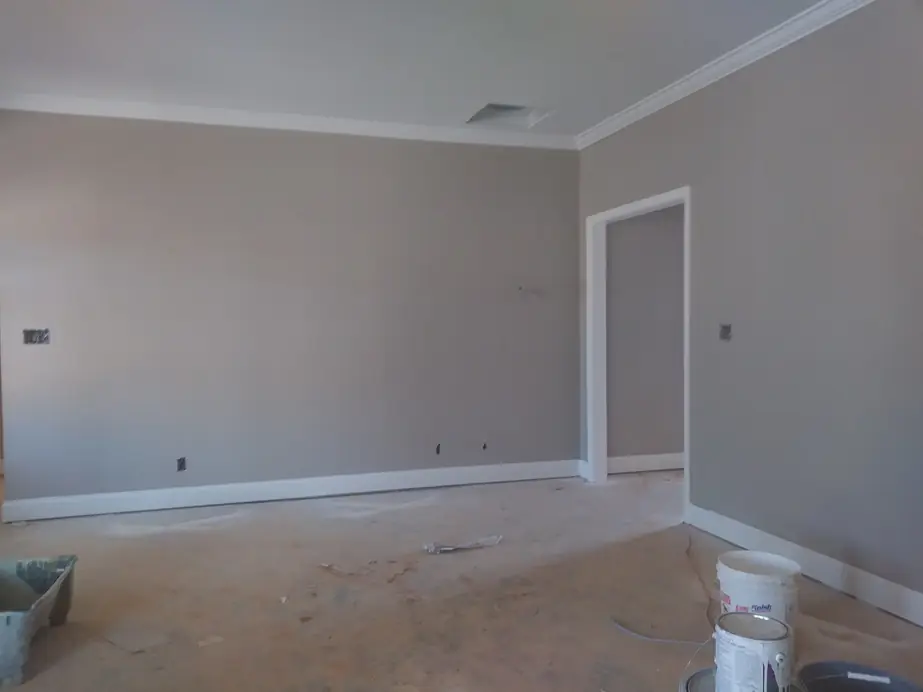
Trim is the smallest area in a room and the first thing your eye lands on when it is wrong. A wavy line where baseboard meets the wall, or a yellowish casing next to a bright white ceiling, reads as sloppy even when the walls are perfect. Three decisions make most of the difference: the sheen, the color and the way the edges get cut.
Which sheen belongs on trim
Trim gets bumped, kicked, wiped and touched far more than walls do, so it is usually painted a step or two glossier than the wall beside it. Semi-gloss is the traditional choice and wipes clean easily. Satin is softer and hides more of the dents in older wood, which is a good trade in a house with beat-up baseboards. High gloss looks dramatic but shows every flaw, so it only works on trim that has been filled and sanded very smooth.
The rule of thumb is simple: the walls carry less sheen than the trim, so the trim reads as a frame around them. If both are the same sheen, the trim loses its edge.
White, off-white or a color
White trim is the easy answer because it separates wall from ceiling and sits well with almost any wall color. But whites are not all the same. Some lean warm and creamy, some cool and bluish, and the wrong one looks dingy next to the wall. Brush out a sample next to the wall color and the ceiling in the actual room, and look at it in daylight and again under lamps. A bright cool white beside warm greige walls can look cold, while a softer white often sits better.
Colored trim, painted the same color as the walls or a deeper shade, makes a room feel calmer and hides scuffed baseboards. It is a bolder choice, and it usually calls for a different sheen than the wall so the trim does not vanish completely.
A few questions are worth settling before anyone opens a can:
- What sheen will the walls be, and is the trim a step glossier?
- Does the trim white clash with the ceiling white?
- Are the baseboards, casings and crown all getting the same color?
- Are the doors and window frames included, and do they match?
- Will the trim be sanded and caulked first, or only touched up?
Crown moulding where ceiling meets wall
Crown has two edges that both need to look straight: the line where it meets the ceiling and the line where it meets the wall. Gaps along either edge get filled with a flexible caulk, smoothed with a damp finger or a rag, before any paint goes on. The caulk is what makes crown look like part of the room rather than a strip stuck on. Nail holes are filled and sanded, bare wood is primed, and then the crown is painted with the ceiling protected.
Casings around doors and windows and baseboards along the floor get the same treatment. Gaps between baseboard and wall are very common, because walls are rarely perfectly flat. A thin bead of caulk closes that gap and gives the paint a clean line to follow.
How a clean line is cut
A steady hand and an angled brush do most of it. Load the brush without overloading it, press just enough that the bristles fan out slightly, and draw along the edge in a single pass. Stopping and starting leaves little bumps in the line. Tape can help in a few spots, but paint can creep under the tape and tape can lift fresh paint, so painters who cut by eye tend to get a sharper result.
Whether the trim or the walls go first is mostly habit, and either order works if the edges are handled carefully. What matters is that nothing is rushed: trim paint needs to be dry enough to touch before the other color is cut in against it, and a light sanding with fine paper between coats takes off dust nibs and leaves the trim smooth to the hand.
Protecting floors and furniture
Baseboards sit at the floor, so the floor needs real protection. Paper or a thin film taped along the floor edge catches the drips, and it should be pulled up before the paint is fully cured so it does not peel the new edge with it. Furniture gets moved to the middle of the room and covered. These steps are dull, but they are why a finished room looks clean on day one.
If you are planning trim work in Bonaire or Warner Robins, Earnest at Unique Painting can look at your crown, casing and baseboards in person and help you settle on sheen and color. His number is (478) 420-1979.
Unique Painting LLC, (478) 420-1979
Call (478) 420-1979More articles
Why Kitchen Cabinets Need a Different Paint Than Your Walls
A cabinet door lives a rougher life than any wall, and the paint and the process have to be chosen to match.
What Happens Before the Color Goes on a Lap Board House
A good exterior paint job is decided in the days before the first coat, and those days are mostly scraping, patching and waiting for wood to dry.